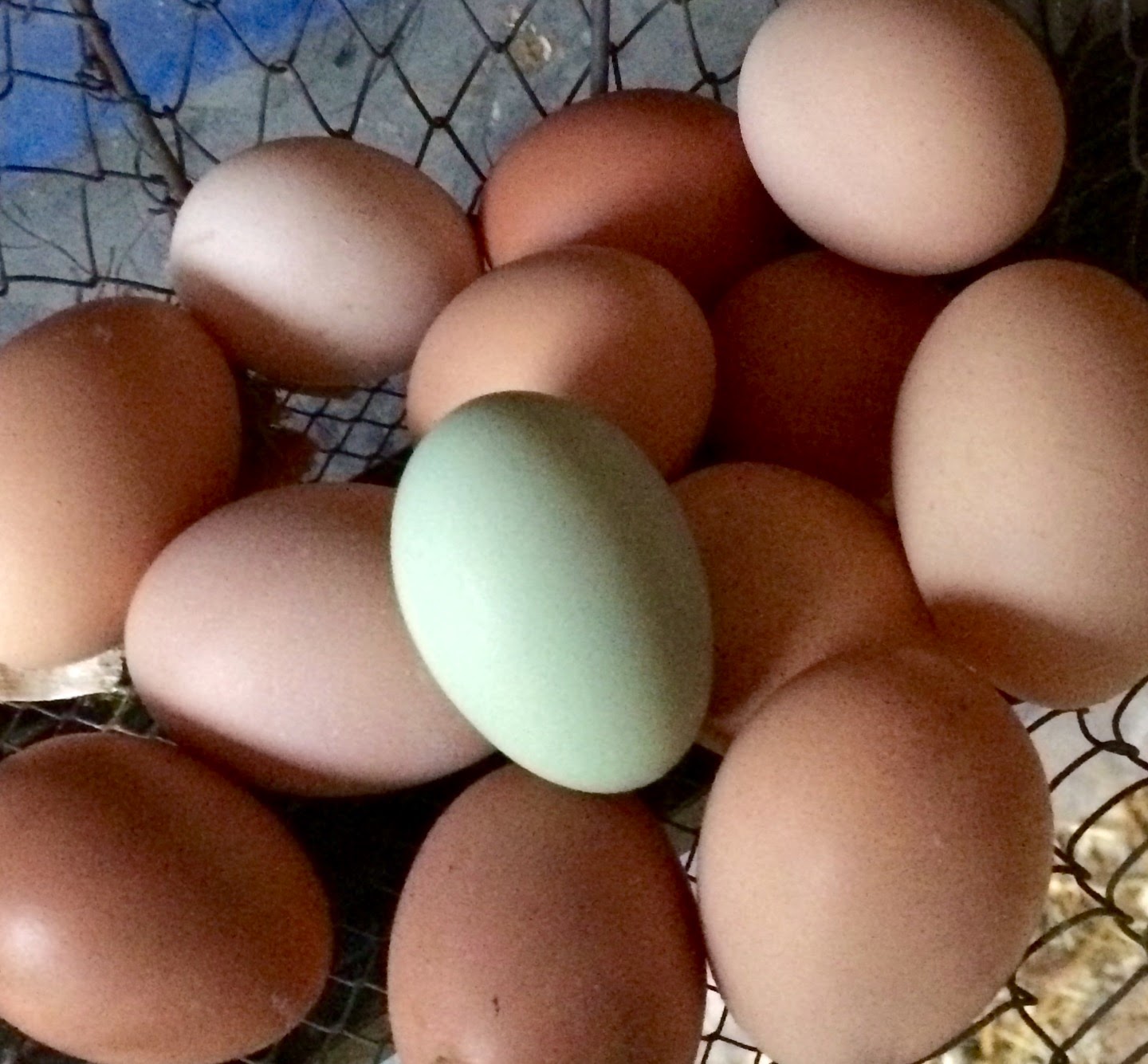
For
our CSA families, the mulberries are ready to pick! You are welcome to pick you
own when you come on Thursday to collect your goodies. Other than
harvesting mulberries for yourself, your goodie bag should look the same as
last week: onion, kale, lettuce,
spinach, arugula ,Swiss chard, and a lovely dozen of eggs.
Saturday, June 13, 2015
Wednesday, June 3, 2015
CSA 2015 has Officially Kicked Off
The first week was welcomed with beets, onion, kale, lettuce, spinach, arugula, a little frozen sweet corn and a lovely dozen of eggs. This week will be an encore. As will be the schedule for the season, we will begin picking at 4:30. Bags should be ready to collect by 6:00 pm each Thursday. If you come earlier, you can help collect and your bag may be done early as well. Come around to the back yard for pick-up. You are welcome to join us for an ice tea (or other beverage of choice) and say hi to the layers and the little chicks or you can collect your items and be off to start your evening.
PS. The little ones are growing fast. We have a mother hen who has adopted the 64 chicks and is being a very good mama ---So sweet to watch her tend to them.
Wednesday, April 8, 2015
Morning in the Vineyard
As we listened to the news last night on the criminal
charges filed in food safety case against egg producers in Reuters
Iowa and saw the stretches of building on top of
building where their hens are kept for production, it gave us great joy and
pride that our eggs are from truly pasture-raised, free-ranging hens. This
morning, our laying ladies greeted the day in the vineyard area, keeping the
vines insect free, the grounds well fertilized and themselves well-nourished
and healthy. This is how every egg should be produced.
Monday, March 16, 2015
Welcome CSA 2015!
CSA Families-
Welcome to 2015!
This past Saturday, we started our
Georgia Jet Sweet Potatoes slips and the March seedlings indoors. See below planting/harvest
schedule for 2015. Not reflected in the image will also be sweet corn in
July/August and mulberries this summer that you will be invited to pick once
they are ready to harvest.
Of note:
- Kick-off gathering on Thursday, May 28, 5:30 – 7:30 where all the CSA families will have an opportunity to get to know one another. We will provide the food, smoking a chicken that evening, and ask everyone just to bring their beverage of choice.
- Pick up will be each Thursday where you get eggs and your fresh edibles for the week.
- We will give you a heads up early in the week via the blog of what to expect on pick-up day: http://walkerhomesteadcsa.blogspot.com/
- The other party dates are 25-Jun and 24-Sep, (which are also the dates you pick up your CSA chickens).
- If not already paid, your CSA payment of $400 is due in April. Checks can be made to Walker Homestead CSA.
- Let us know if you want organic eggs laid by pasture-raised, free-range chickens prior to that CSA season start. We sell them for $3.50/dozen with the egg carton returned for reuse. Drop us an email and we can bring them to the hospital or the Tippie College of Business.
Bob and Kristy
Walker
3913 James Ave SW
Iowa City, Iowa,
52246
walkerr735@gmail.com
Saturday, February 28, 2015
CSA 2015 Gear Up
Spring is coming-Time to kick in the CSA.
CSA 2015
membership: June - September $400
- Approx. dozen brown
eggs/week from pasture-raised, free-range chickens
- Organic vegetables with seeds from Seed Savers of Decorah, Iowa
(Sample Vegetable List on Back)
- Approx. 5+ pound whole chickens (1
mid-summer and 1 fall)
- Chickens originate from Murray McMurray
Hatchery of Webster City, Iowa
If buying additional items or a non-CSA
member
- Buy the dozen: Eggs $4.00/dozen ($3.50
if returning carton)
- Buy the pound: Chicken $5.00/pound
Benefits of pasture-raised, free-range hen
eggs over supermarket eggs from a processing plant:
- Age - Fresh this week vs. supermarket eggs tend to
be 1-2 months old. The f resher the egg, the richer the flavor. Note: fresh eggs
are more difficult to peel so if wanting for hard boiled eggs, sprinkle backing
soda in water while boiling or have them sit in the fridge for a month.
- Yolk Color – Influenced by diet. Yard hens that forage
for bugs and greens will produce a deeper yellow, almost orange color yolk.
- Nutritional Content - Up to six times more vitamin D, two times
more omega-3 fatty acids, more vitamins A and E and up to one-third less
cholesterol. *2007 Mother
Earth News Study.
If interested in items, contact:
Bob and
Kristy Walker
3913 James
Ave SW
Iowa City,
Iowa 52236
Wednesday, February 11, 2015
Joy : Farmer's Table
Joy noun (ˈjȯi) Sharing your passion with
others, such as love for land and food. We have the great privilege of hosting
a Farmer’s Table dinner this
Valentines weekend. Chef Chris Grebner is an extremely talented culinary artist.
His passion is to bring together the food producer with the food consumer, over
a four to seven course meal on the property where the food is produced. These evenings are exquisite
with an eclectic group of people coming together to enjoy meeting new people, fine
foods and conversation, and having their own beverage of choice in the beauty of a
country setting.
Wednesday, January 21, 2015
Benefits of Working and Living off the Land
I have a new hero: Stamatis Moraitis, pictured below and featured in the New York Times Article. It speaks to the health benefits of working and living off the land and adopting a life style within a carring community. It makes me want to move forward
with getting goats and to next year’s harvest of grapes for our first wine. As we prep for spring and make decisions on
how we are structuring the CSA for 2015, the ladies are still producing up to 2-3 dozen eggs a day! At the moment we are selling eggs for $3.00/dozen. Let us know your orders and we will work
logistics.
Monday, December 8, 2014
Crazy Egg-Production Ladies
Now
that the cold has set in, the ladies' production is up. We are getting close to two
dozen eggs a day even with the short days of sun light. We are so happy that
they are finally behaving and saving their eggs for us. With all the extra eggs
of late, look for some yummy egg recipes to come your way.
Saturday, November 22, 2014
The 6 Vegetables That Will Save Your Life
(This is a great article shared from Dean by Timothy Grower from Men's Journal 9/19/2014...)
If
there’s one food that no one — not your doctor, your nutritionist, or even your
mother — will tell you to eat less of, it’s leafy greens. Calorie for calorie,
chard, collards, kale, and other leafy greens may just be the most nutritious
food you can eat. They’re packed with vitamins — A, B, K, and others — but also
rich in essential minerals like calcium, iron, potassium, and magnesium, as well
as antioxidants, which protect cells against damage. Leafy greens contain
phytochemicals, natural compounds that can help prevent hardening of the
arteries and lower inflammation linked to heart disease. The greens’
synergistic combination of vitamins, minerals, antioxidants, and phytochemicals
helps detox cells and expunge free radicals that damage DNA, both of which may
inhibit cancer cells from forming and multiplying.
Greens
are also your single best source of natural nitrates, which get converted by the
body into nitric oxide, a gas that lowers blood pressure, promotes blood flow,
and can even improve erections. You produce less nitric oxide as you age —
levels can dip by half after age 40 — which means you need to eat even more
nitrates to keep everything working properly, says University of Texas
biochemist Nathan Bryan. As if that weren’t enough, greens have been shown to
boost mental clarity, prevent depression, and reduce the risk of diseases like
Alzheimer’s. If you’re looking to stay lean, high-fiber greens help speed
digestion and make you feel full, and they’re low in carbohydrates and
calories, so you can practically eat as much of them as you want. At the very
least, aim to consume three to five ounces of leafy greens a day, says Bryan.
Here’s how to get your fill.
1.
Swiss Chard
Why
You Need It: This green is a top source of two important, lesser-known
antioxidants: syringic acid and kaempferol. The former can help stabilize blood
sugar by inhibiting enzymes that turn carbs into simple sugars, while the
latter protects cells against cancer-causing toxins, lowers inflammation, and
may also reduce your risk for heart disease, diabetes, and other chronic
diseases.
How to
Eat It: Save calories while boosting your antioxidant intake by using
Swiss chard instead of tortillas to make burritos and wraps. Cut leaves from
stems, and steam leaves briefly. When cool, fill with your favorite healthy
burrito staples: brown rice, quinoa, grilled shrimp or chicken, black beans,
goat cheese, chopped tomatoes, sweet potatoes, or other vegetables; beans,
grains, or grilled meats. Or sauté chard stems in garlic and olive oil for
several minutes; add leaves, pine nuts, and currants; and cook two to three
more minutes before serving.
2.
Arugula
Why You Need It: Arugula has one of the highest nitrate levels of any leafy green, helping to increase blood flow and therefore enhance performance. It’s also packed with flavonoids — antioxidants that fight heart disease and even some cancers. New research suggests it may also prevent ulcers.
How to
Eat It: Arugula can be slightly bitter, so dress it in a salad with a
fruity vinaigrette to counter the bite.
RELATED: Is Organic Food Healthier?
3.
Collard Greens
Why
You Need It: Of all leafy greens, collards are best at binding your stomach’s
bile acids, which can help lower your cholesterol levels and even protect you
from some cancers. Collards also contain a special class of phytochemicals that
nourish the body’s natural detoxifying system.
How to
Eat It: Boiled collards are a soul-food staple, but unless you eat the
broth, you’ll miss out on many nutrients. Steaming preserves more nutrients and
increases bile-acid-binding activity. Jill Nussinow, a dietitian and chef,
recommends kneading sturdy greens like collards or kale with olive oil for a
few minutes before cooking to increase their flavor and make them easier to
chew. Or massage with tahini and braise in garlic and lemon juice.
4. Bok
Choy
Why You Need It: Bok choy is one of the best sources of potassium, which helps build muscle and keep blood pressure low. It’s also packed with vitamin A, which strengthens the immune system by increasing white-blood-cell activity and the body’s response to toxins.
How to
Eat It: Chop up and braise the lower, white portion of the stems in
chicken or vegetable broth and sesame oil. Add leaves after two minutes, and
cook another one to two minutes.
RELATED:
6 Healthy Foods That Get a Bad Rap
5.
Kale
Why
You Need It: Kale is a prime source of cancer-thwarting compounds called
glucosinolates, as well as kaempferol, which researchers believe combats cancer
and may also, incredibly, protect the heart, lower blood sugar, strengthen
bones, and reduce inflammation in the body. Kale is rich in lutein and
zeaxanthin, antioxidants that help prevent eye disease and vision loss as you
age.
How To
Eat It: Briefly sauté kale in olive oil with chopped onions, and then
braise in white wine or vegetable stock for five to 10 minutes.
6.
Watercress
Why You Need It: A single cup of watercress will bump you over your recommended daily value of vitamin K, which can help regulate blood clotting and reduce plaque on artery walls, and may lower inflammation linked to chronic diseases like arthritis. If you could stand to eat watercress daily for two months, you would cut DNA damage to your white blood cells, reducing your risk of cancer and lowering your triglycerides (unhealthy blood fats) by 10 percent, according to studies. At the very least, eat more.
How to
Eat It: Watercress adds a peppery crunch to grilled cheese and other
sandwiches, and also works well in salads. Or take a tip from Julia Child and
simmer a pound of potatoes, three cups of leeks, and a little butter in two
quarts of water for an hour; add a cup of watercress and simmer five more
minutes before pureeing in a blender until smooth. Don’t worry about losing
nutrients: You’ll retain them in the base of this flavorful soup.
Hard-Boil Egg Tip
Blog
entry: The
Perfect Hard-Boiled Egg—Yes, Even with Fresh Farm Eggs | Paths of
Wrighteousness shares a hardboiled egg tip for the fresh farm eggs. It
comes highly recommended from Karmen “… talks about how to poke holes in farm
fresh eggs before boiling them. I have had great luck with this.”
Subscribe to:
Posts (Atom)